


Complete guide to growing ranunculus and anemone flowers
I have been growing ranunculus and anemone for seven years and I believe I have managed to make every possible mistake when growing them. In recent years, I have worked out a fine-tuned growing process that allows me to grow a beautiful, stable harvest of spring flowers. To avoid the mistakes I made over the years, I have prepared this guide on methods and techniques of growing ranunculus and anemone on our farm.
The life cycle of ranunculus and anemone
In order to grow ranunculus and anemone successfully, it is good to understand their natural life cycle. Both species come from the Mediterranean region, their natural range is the Middle East, Greece and North Africa. These are all areas with a maritime climate, mild winters with none or very occasional and mild frosts and hot summers. Both are, so to speak, winter plants. They take advantage of winter precipitation and mild temperatures and start growing in the fall. They form leaves during the winter and begin to bloom as soon as the spring warmth arrives. To survive the hot and dry summers, they go dormant with the onset of high summer temperatures. They pull nutrients and energy from the leaves into the corms and wait the summer out in this form. Until the rain and cooler temperatures wake them up in the autumn. Even though our climate in central Europe is different, if we want ranunculus and anemone plants to thrive, we need to imitate these conditions as best as we can.
Planting time
In order for ranunculus and anemone to bloom, they need about three months of growth in cooler temperatures. There are two ways to achieve this in our climate. First, we can plant them in the autumn and overwinter them, in which case, they’ll need to be well protected from severe frost. Second, we can plant them in late winter or early spring, as soon as the ground thaws. However, the spring planting does not work for anemones in our garden. Our farm is located in southern Slovakia (zone 7) and high temperatures tend to set in very quickly in spring. As a result, the anemone season would be too short and the flowers would be few, with very short stems. Nevertheless, the spring planting can work well in higher altitudes or colder northern areas.
I plant ranunculus in my garden in two phases: the larger portion of the plants goes in the ground in autumn, during October. I plant both in the greenhouse and in the outdoor beds, covered by a low tunnel. I keep a smaller portion of my corms for the end of winter. I presprout them in January and put them in the ground as soon as the soil thaws. Depending on the weather, this can be in the second half of February or very early March. Ranunculus planted in spring blooms a little later, so this helps to extend the ranunculus season on our farm. It is also a good insurance policy in case that extreme frosts would come in winter and destroy our autumn batch of plants.
Growing process
1. Soaking
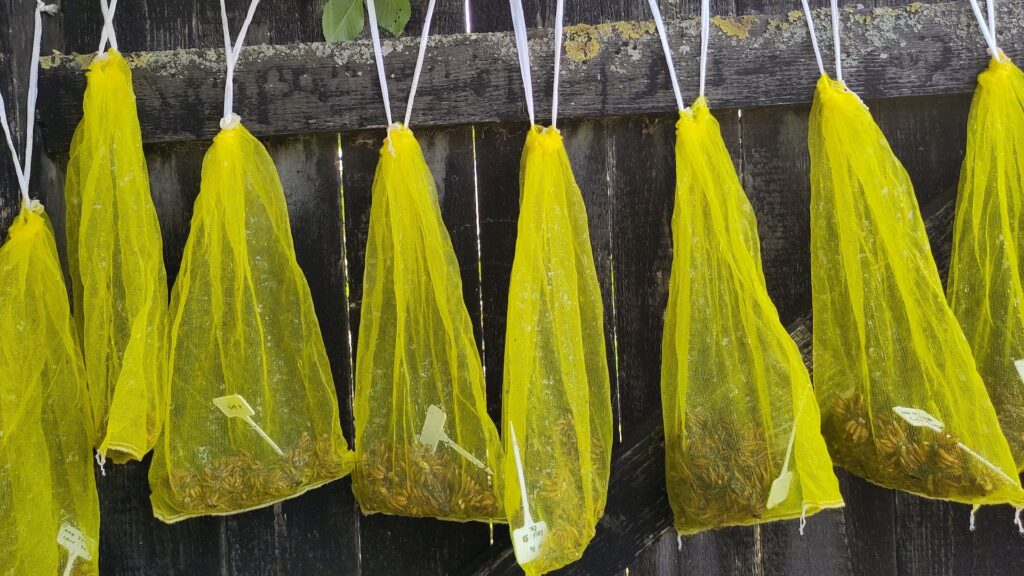
The corms are usually delivered thoroughly dried, so it is a good idea to speed up their growth by letting them soak before planting. I divide all my corms by variety, put them in bulb sacks (for example, those used to sell onion or tulip bulbs) and I leave them in water for about 4 hours. I recommend letting the water run a little the whole time of soaking to oxygenate, as the oxygen aids the sprouting. The tubers will almost double in size, so will be able to see when they are ready. Be sure not to overdo the soaking, as an excessive soaking can actually damage the ranunculus corms and turn them into a mash. Anemone corms may need a little more time to soak, about 5-6 hours.

2. Presprouting (optional)
You can plant the swollen tubers directly in the garden. However, I prefer to presprout mine before planting, so that they start to form their first roots and leaves. This way, I can discard damaged corms that wouldn’t germinate (although, this happens very rarely with the Italian and French corms we offer in our e-shop) and there are no empty spaces left in my beds. The presprouting process also saves water, since you don’t need to irrigate the entire bed for a couple of weeks, just make sure to keep a few trays wet. It also helps to have a week or two more to prepare the beds, which is the unwinnable race for me almost every year. In addition to these advantages, in my experience the germinated tubers are more resistant to pests and are less likely to fall victim to mice and voles.
Presprouting requires a very light and airy growing medium, which does not contain too many nutrients and stimulates the good root formation. Cutting medium (Steckmedium) from the German company Klasmann-Deilmann is my go to presprouting medium. If I wouldn’t have access to it, I would mix a high-quality seeding medium in a 1:1 ratio with perlite. I moisten the substrate, but take care not to overdo it. When you form a lump in your hand and squeeze it, the water should not drop out of it. Otherwise, there is a risk that the excessive moisture would cause the corms to rot instead of sprouting.
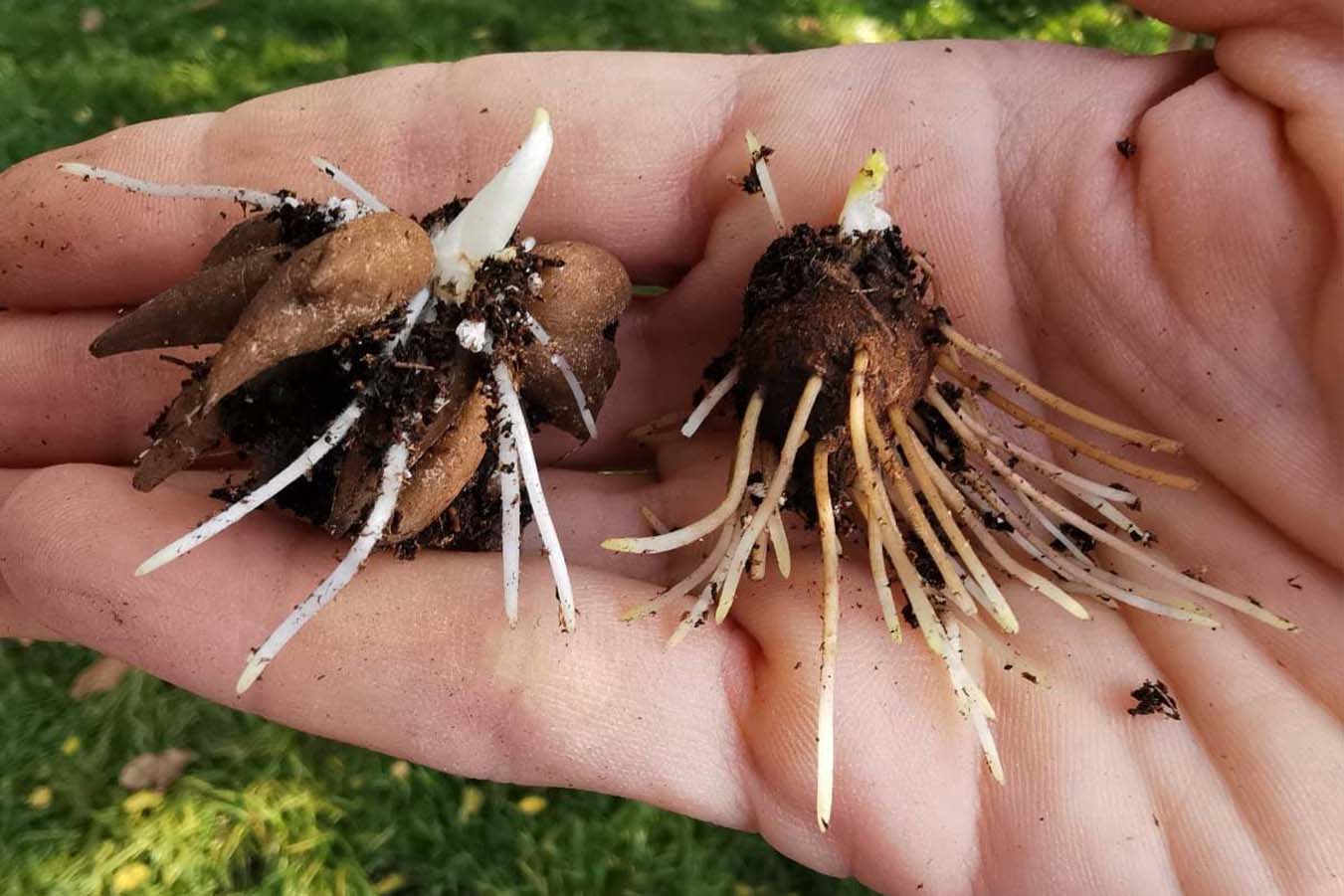
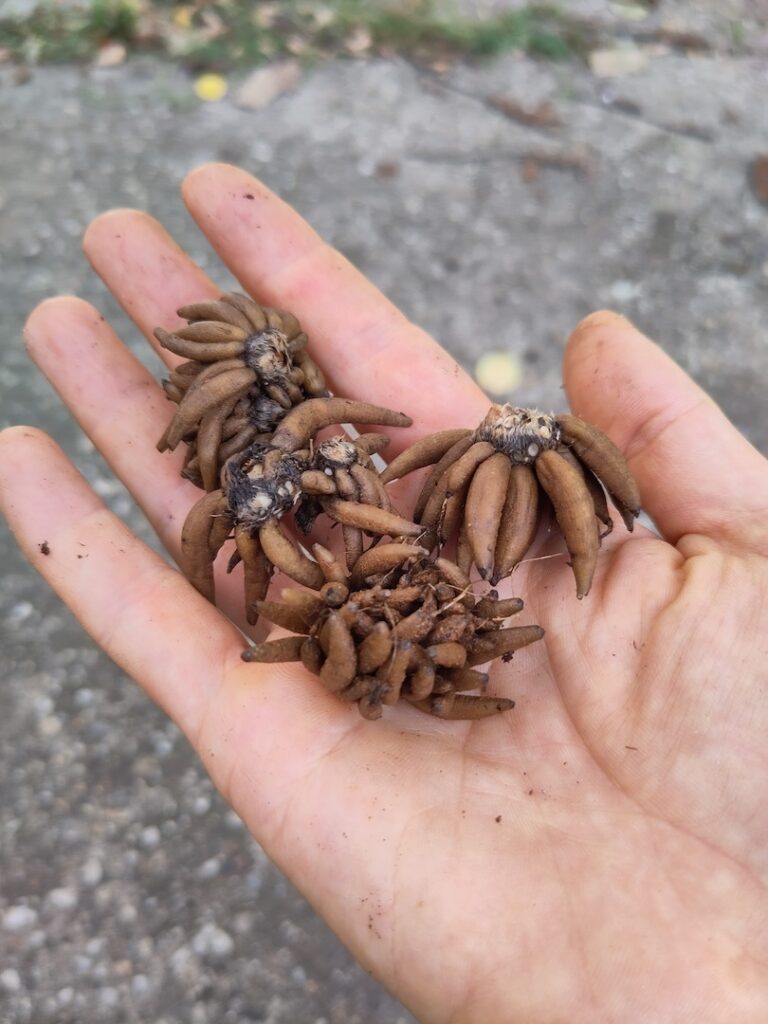
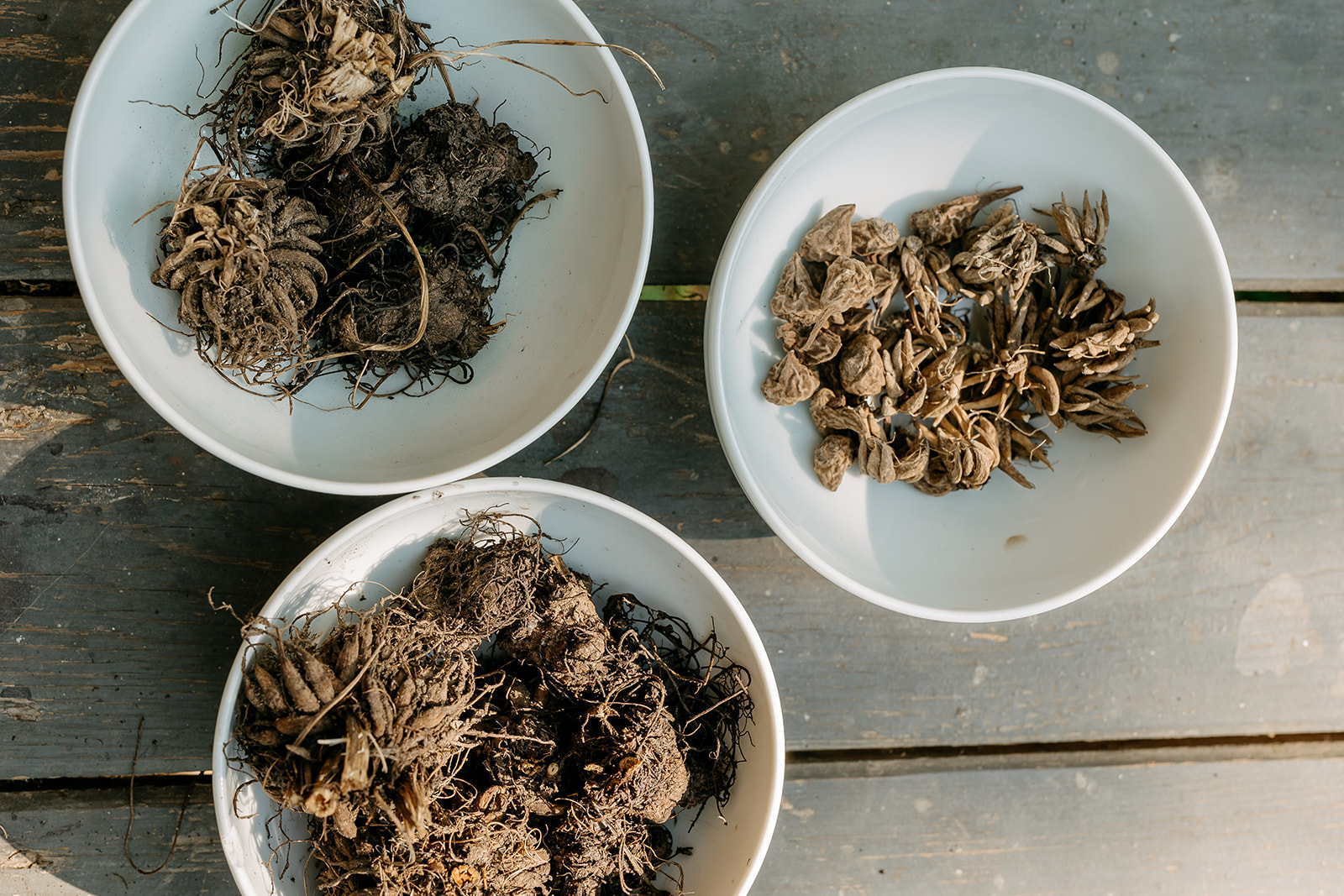
I put about 1.5 cm of moistened medium in larger trays and place the soaked corms in rows in the medium. Ranunculus corms are shaped like small octopuses and they need to be placed with their “tentacles” down. Anemone corms are more or less round, but they usually have a small pointy tip on one side – this side belongs down when planting. However, you don’t need to worry too much about the proper positioning of the corms. The plants orient themselves by gravity, so they will grow in the right direction, no matter how you turn them. It may just take them a few days longer to get there.
I cover the corms in trays with another layer of wet medium. There’s no need to put a thick layer on, just so that they are completely covered. I cover the trays so that moisture does not evaporate from them too much. The easiest way is to use large plastic gastro containers or boxes with the cover from IKEA. If you are using classic planting trays, they can be covered with pieces of polycarbonate or glass, left over from the construction of the greenhouse.


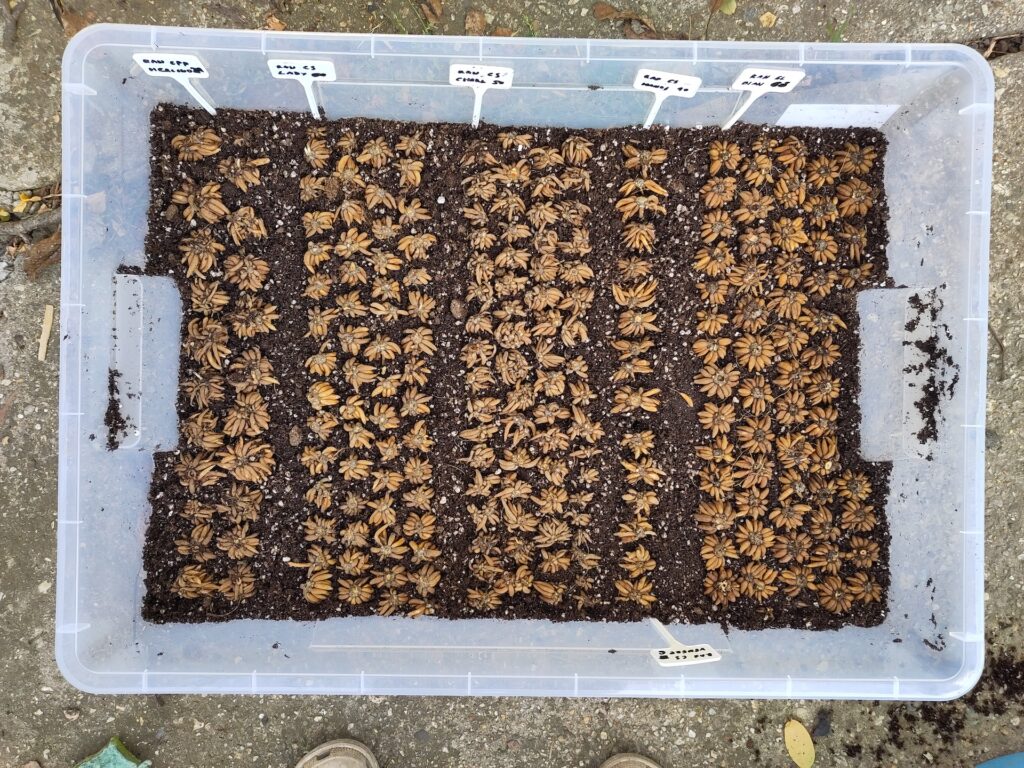
During presprouting, you need to check occasionally that the medium in the trays does not dry out. Too much evaporation will cause the edges of the trays to dry out and the corms in the dry medium will not sprout until you moisten it a bit again.
The corms set up this way need a stable, low temperature to presprout, ideally 4 – 10 degrees Celsius. Never leave them at room temperature or in a greenhouse, where the temperatures can fluctuate significantly, especially in the autumn and in the spring. Soaked corms will start to rot very quickly in such an environment. I have tried two different versions of presprouting temperatures. Presprouting in the refrigerator at a temperature of 3-4 degrees Celsius takes about a month. In our basement, at a temperature of about 10 degrees Celsius, it can take just one or two weeks. I leave the corms in covered trays and only check them every couple of days. I check whether the medium is wet enough or whether there aren’t any signs of mold in the trays.
After a week, I dig up a couple of corms and check whether they have started to form roots. If not, I like to check them again after another week. When the new roots grow 0.5 cm to 1 cm long, they are ready to be planted in the ground. I recommend not to delay the planting: when the plants have already formed longer roots and the first leaves, handling them is much more difficult and planting will take much longer time.


3. Planting
Method for preparing a bed for ranunculus and anemone plants depends on the quality of the soil in your garden. They both prefer a light, free-draining and nutritious soil. We have a nice, healthy black soil in our garden, so our beds don’t require much preparation. I plant the corms in a cleaned bed topped with a layer of compost and castor seed meal (leftover from castor oil pressing) to repel voles and mice. If your soil is not very nutritious, you can add a little granulated chicken manure or other natural source of nitrogen in the spring. Do not add nitrogen fertilizer in the fall, as with additional nitrogen, the plants will grow faster, but their cells are not as firm and are therefore less resistant to frost.
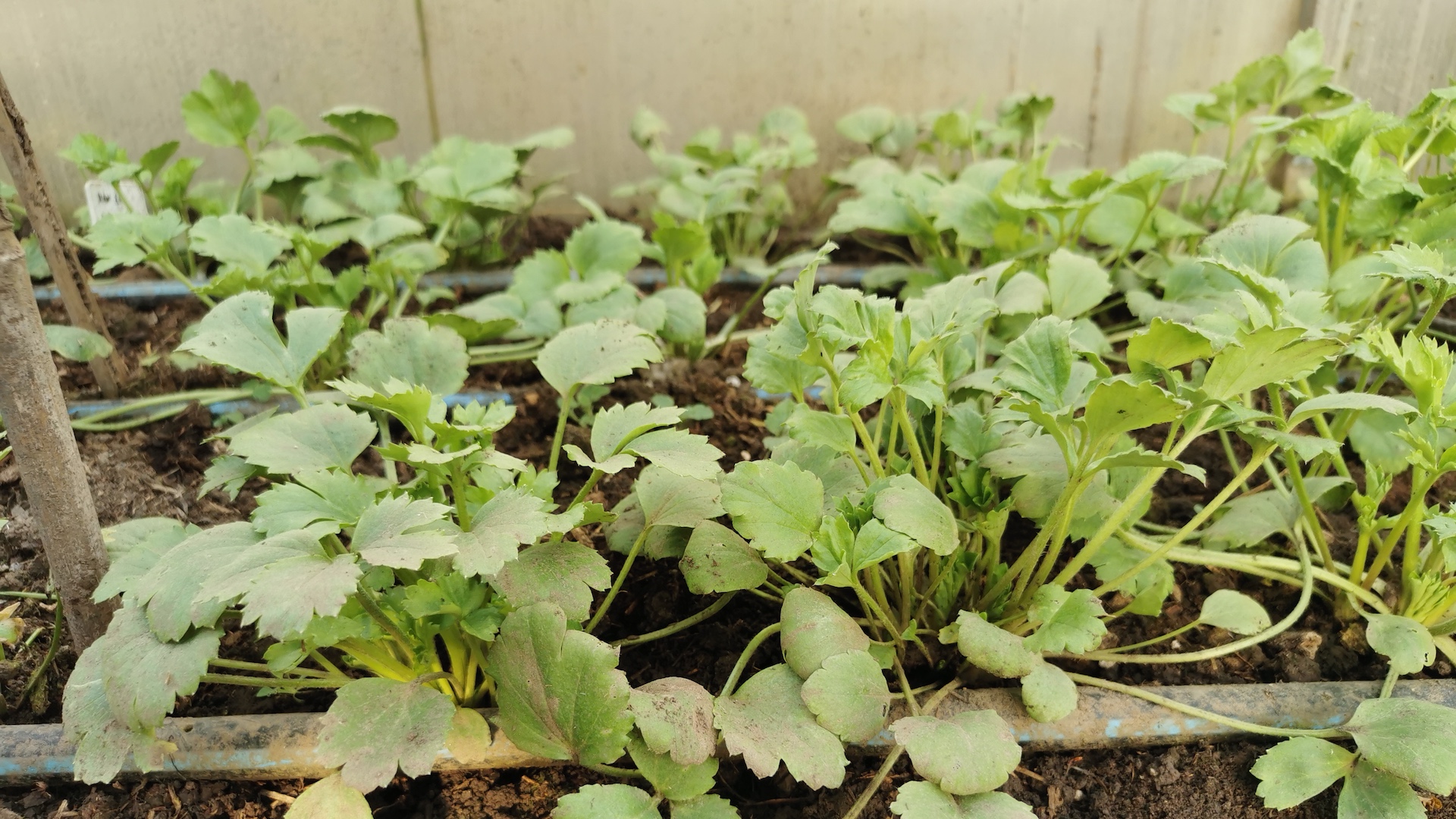
Recommendations for plant spacing vary, but most sources recommend spacing of 15 cm. I plant my corms with 15 cm spacing in the rows 22.5 cm apart, as that’s how my drip irrigation hoses are spaced. In each row, I dig a 5 cm deep trench, place the tubers in it and cover them with soil. After the planting, I water the entire bed to keep the roots in good contact with the soil. I don’t irrigate them again until the first leaves have sprouted.


Plant care
Frost protection
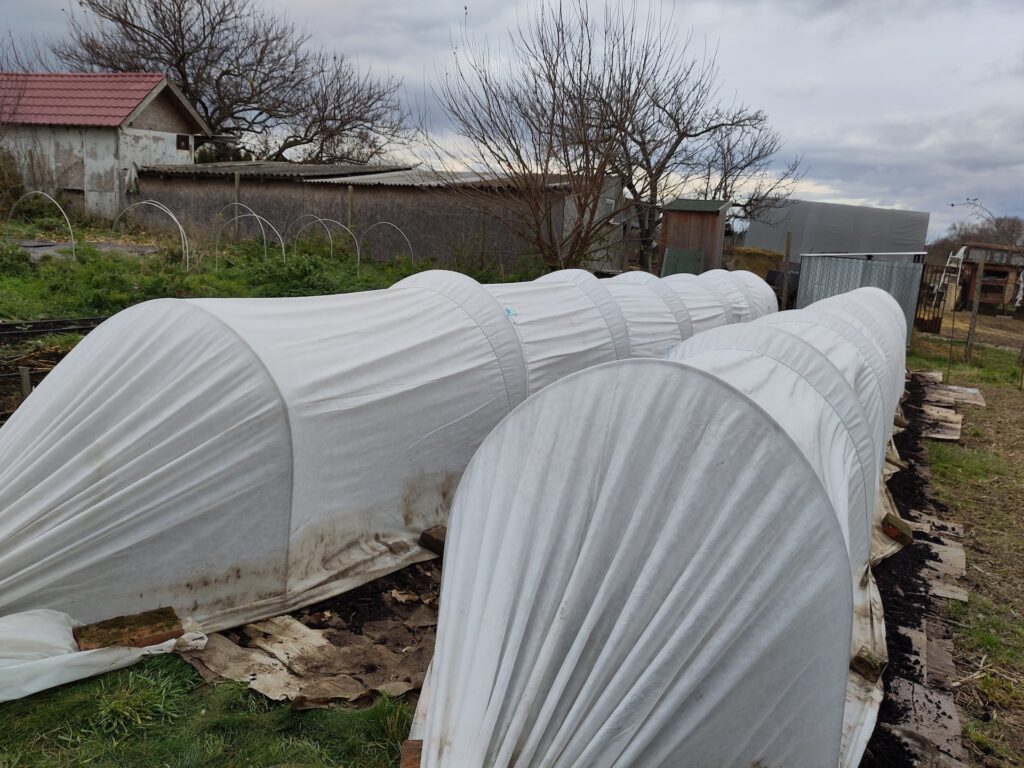
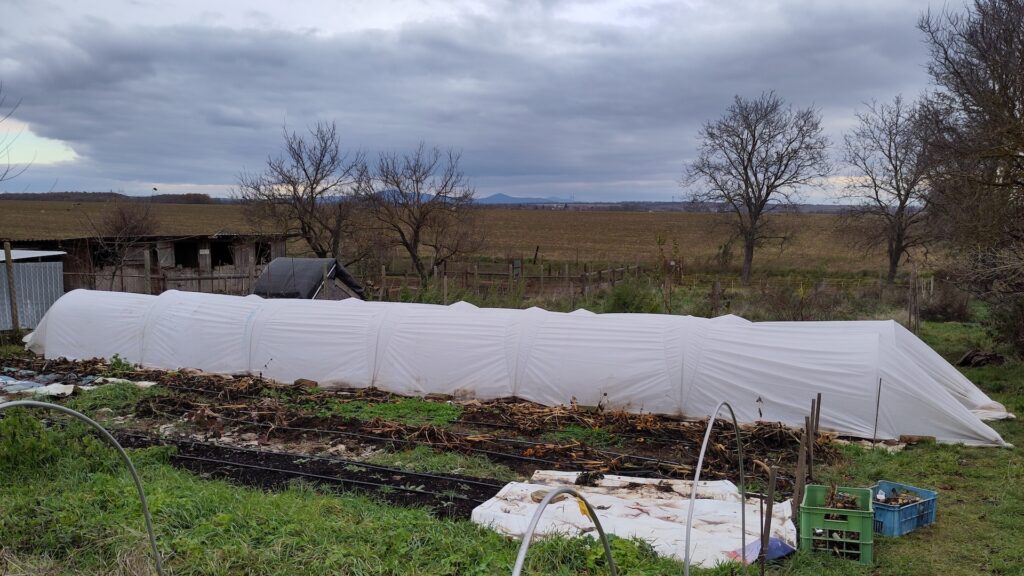
The plants planted in the autumn need good protection from frost. Although they can tolerate temperatures below freezing (some sources say they can handle temperatures as low as -6 degrees Celsius without protection), the prolonged frosts weaken the plants and reduce our spring harvest. I plant some of the fall plants in a polycarbonate greenhouse and some are placed in low tunnels outdoors. To create a low tunnel, I stretch and attach a 50 g/m2 agrotextile over aluminum hoops. Constructing a low tunnel is a topic for a separate blog, so I won’t go into getails here. If you want to see the detailed process, Tony Gaetz from Bare Mountain Farm has an excellent series of videos on YouTube.
When there are severe winter frosts in the forecast, I add one or two layers of thinner, 17-gram agrotextile to cover the plants directly on the ground. However, when covering the beds directly, you increase the risk that voles and mice will get to your bed and eat your plants, so I only do it when absolutely necessary.
If you do not have the space or equipment to make such protected beds for your plants, there is another option for overwintering them: in trays placed in a greenhouse or high tunnel. I tried this method out of necessity, because I did not have time to prepare a new bed for my ranunculus and anemone one season. I placed them in a small greenhouse in the trays in which I presprouted them for the whole winter. When the temperatures went well below 0 degrees Celsius, I covered them with thin agrotextile and I planted them early in the spring. Plants grown this way will never be as lush and productive as those overwintered directly in the soil, but you can still harvest a decent amount of flowers from them. The word of caution: you need to be very careful about watering the trays and only water them so that the medium does not dry out completely. I overwatered my plants at the end of winter and lost about half of the corms because of this.

Nutrition and fertilization
Ranunculus and anemone are hungry plants that put up intense growth and produce lots of flowers in a short time, so they need adequate nutrition. On our farm, we feed them with foliar fertilizers, as soon as the spring arrives.They receive a dose of nettle juice to replenish nutrients and a dose of calcium from eggshell extract every two weeks. We water the soil with leaf mold tea to strengthen the plants’ immune system and give a boost to soil life. And, of course, we irrigate the beds regularly. This season, I plan to experiment more with vermicompost and various natural fertilizers and sprays, so you will eventually find more detailed recipes and instructions on how to do this on our blog.
Of course, it is very important to keep the beds weed free. Our ranunculi and anemones are planted rather tightly and weeding allows them enough space and light to grow. It is also a good prevention against fungal diseases – dense weed cover restricts the airflow on the beds and can increase the risk that your plants will be killed prematurely by powdery mildew. On our farm, the weed pressure has decreased significantly since I started using no-till techniques, so I only need to go over the beds with a stirrup hoe once every two weeks (by the way, the stirrup hoe is a great invention, I highly recommend it).
Protection from high temperatures
If you want to extend your season and harvest ranunculi and anemones as long as possible, I recommend to provide shade for the beds in late spring and early summer, so that the soil does not heat up too quickly and to protect them from intense sunshine. I use a shade net attached to the same hoops which held the low tunnel cloth in the winter. The slight difference is that I only cover one side of the bed facing south with the shading net.

Flowering
The flowering time of anemone and ranunculus varies a lot with the weather. There was a season when our first anemone flowers opened in February and they overtook even daffodils and tulips. The flowering time also depends on a variety – you can check our varieties overview for more details. In general, both species need to grow approximately 90 days in mild weather to start flowering. For Italian ranunculus varieties from the Elegance line, the producer states that the first flowers can appear as soon as 60 days after planting. In winter, the growing period is significantly extended, of course.
Here in southern Slovakia, we harvest anemone flowers from about early April till early June. They start flowering earlier, but the first flowers have, as a rule, very short stems and are not usable for the bouquets. Cut these first buds as soon as possible, the longer and longer stems will gradually follow. In terms of flower quality in time, ranunculus is very different – its first flowers are usually the largest and of highest quality. On our farm, we harvest them from April till early July, provided that the weather is favourable and the temperatures at the beginning of summer aren’t extremely hot.
Harvesting flowers
If you want the flowers to last as long as possible, you need to follow a few basic rules: collect the flowers in cooler weather in the morning or in the evening, put them in clean, cold water in a thoroughly cleaned container and leave them in the cold space to hydrate for several hours.
I harvest anemones when the buds are still closed, but have nicely formed, large petals. Flowers cut at this stage should last in a vase for a week or 10 days. If you need extra large and spectacular flowers, it is best to wait until they are fully open, but the stamens in the middle of the flower do not yet release the pollen. Such flowers have a shorter vase life, a maximum of 5 days, but if you need them for wedding work, they are ideal.
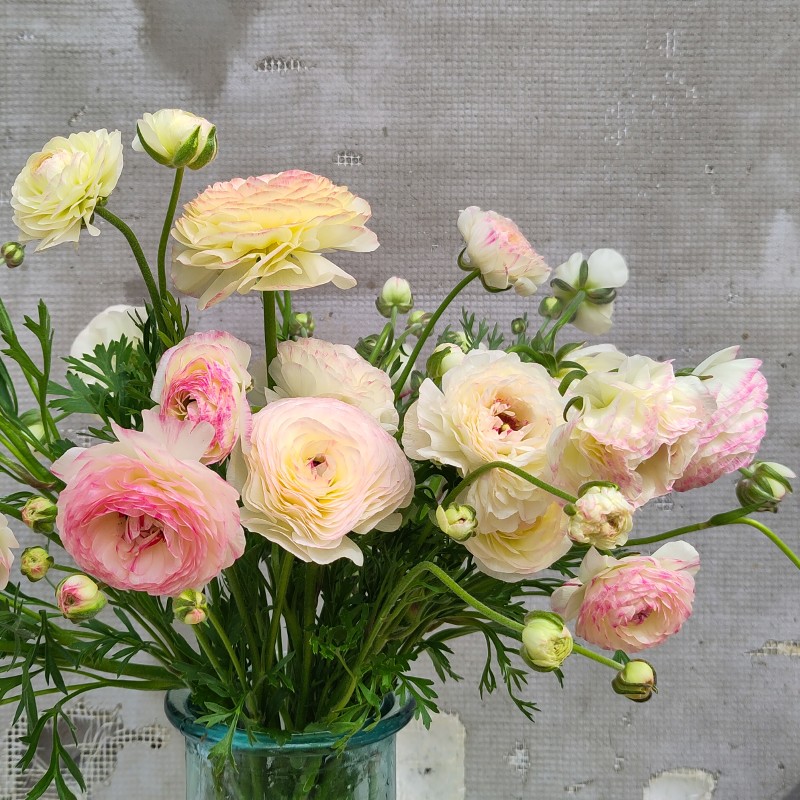
When harvesting ranunculus, the right phase depends on the specific use. The Italian producer of corms from the Elegance® and Cloni Success® lines recommends waiting till the bud opens and closes twice before harvesting. I prefer to use the ranunculus in different stages of flowering in my bouquets and arrangements, so I harvest closed, nicely developed buds as well as fresh, fully opened flowers. The shelf life of freshly harvested ranunculus is amazing, they last as long as two weeks in a vase for me.


Diseases and pests
Rodents
Like any other species, ranunculus and anemone have their enemies in the garden. On our farm, the rodents, especially voles and mice are the greatest danger to our plants. When I planted anemones for the first time, I planted them in beds covered with the landscape fabric for weed protection. In a couple of weeks, I noticed that the plants were gradually disappearing from my bed. When I checked what was going on under the landscape fabric, the entire bed looked like a rodent highway, it was completely riddled with their paths. In order not to create such an extra tempting environment for rodents, I have not used the landscape fabric on beds ever since. I prefer to invest the extra time in weeding the beds rather than fighting the unwinnable war with voles.
I have found castor oil and castor seeds to be effective in repelling them. I use Talpa Raus castor meal, though it’s rather expensive. As an alternative, you can make a home-made repellent from unrefined castor oil. Simply mix unrefined castor oil with organic liquid soap or detergent in a ratio of 2:1 and dilute 75 ml of the solution in 10 l of water. The entire flower bed should be thoroughly watered with the solution. Some farmers swear by the ultrasonic rodent repellers (for example, from the Czech producer called Deramax). I use it in our basement and the corm storeroom and it worked reliably for some time. Nevertheless, it seems that the rodents can gradually get used to the sounds. Also, I don’t want to use such repellers in my garden. They also repel natural predators that can help to control the rodent populations: martens, weasels and snakes. Since I want to have as many of these creatures in the garden as possible, no repellers for me.

Fungal diseases
Both ranunculus and anemone are susceptible to fungal diseases that cause root rot and the death of the entire plant. This is especially high risk in heavier, less permeable soils. If your plants start to wilt despite sufficient watering, I’d recommend digging them up and checking them – if you find brown, rotting roots, the plants should be dug up and disposed of in municipal waste or burned. Do not put infected corms in the compost, you could spread the pathogens to other beds. These types of disease are incurable and can spread to healthy plants through the soil. Crop rotation is a good prevention. If possible, do not plant ranunculi and anemones in the same bed for two seasons in a row. Powdery mildew is another fungal disease that can attack your ranunculus and anemone plants. It’s recognizable by the white powdery coating on the leaves and if it is too intense, it can shorten the life of the plants and reduce their productivity. In my garden, it only appears in a mild form on exhausted ranunculus plants nearing the end of their flowering season. In my experience, anemones are more resistant to powdery mildew. Even with this fungal infection, the plants can still produce new flowers. To prevent it, do not use overhead irrigation on the beds and water them with drip irrigation insteads. It is also important to keep the beds weed free, so that the air can flow between the plants and remove excessive moisture from the leaves.
Aphids
Last but not least, young shoots or even buds of ranunculus and anemone can be attacked by aphids. I have not encountered them on my plants, but they sometimes infest roses and some fruit shrubs on our farm. I manage to control them by spraying with nettle juice or organic soap solution. Aphids are particularly fond of plants that experience some nutritional imbalance – they get too much nitrogen or not enough of calcium. Therefore, you need to be careful not to over fertilize the beds. If necessary, regularly supplement calcium with natural foliar spray, such as eggshell extract.
When blooming season is over
With the onset of summer heat, the ranunculus and anemone plants enter dormancy. They stop blooming, the leaves gradually turn yellow and dry up, and the plant uses the nutrients from the leaves to form corms. That’s the time when you can dig them up and save them for the next season. This is commonly done with ranunculus, but in my experience, you need to expect some fluctuation in the quality and the amount of flowers in subsequent seasons. From what I’ve observed, the ranunculus corm can gradually grow larger for two to three seasons and then divide into several smaller corms. It’s great that you can multiply them this way, but the smaller corms will produce fewer flowers in the next season.
Our corm producers do not recommend using anemone corms for several years in a row due to the possible transmission of diseases. However, I have experimented and left some anemone corms the bed for several years and they managed without any signs of disease. The number of plants did decrease from season to season, but I attribute this mainly to the lack of care – the plants had no protection from rodents, frost or weeds. Anemone corms do not divide in a way ranunculus does. They continue to grow larger and gradually age. After they reach a certain size, their productivity decreases, so it is good to replace them with fresh corms in the ideal size (4-5) every couple of years.
Digging up and storing the corms
The ideal time to dig up and store the corms is as soon as the leaves turn completely yellow and start to dry out. Nature processes them very quickly and they disappear completely – finding the corms in the ground in this stage can be quite tiresome. In an ideal world, I would wash the dug up corms, disinfect them with an ecological disinfectant (Sanofyt) and leave them to dry completely in a warm, airy place. I have never had time to do this properly, and so far I have always just dug up the corms and left them in the barn all summer long. Despite this, they were quite viable, so even if you don’t have time to process the corms, it is still worth digging them up. If your soil is healthy and your plants are disease-free, it can even be beneficial to leave the soil on them, as it can be populated with beneficial microorganisms that can help the plants.
Until planting season comes again, store the tubers in a cool, airy place. It is best to place them in bulb sacs or in crates, to ensure they get good ventilation and are protected from any mold attacks.
Well, that’s our experience with techniques and methods of growing ranunculus and anemone. What’s your growing process? Have you tried any other methods that worked well?